2026.10.23
Trigeminal Neuralgia and Gamma Knife: Differences From MVD, Time to Pain Relief, Recurrence, and Numbness
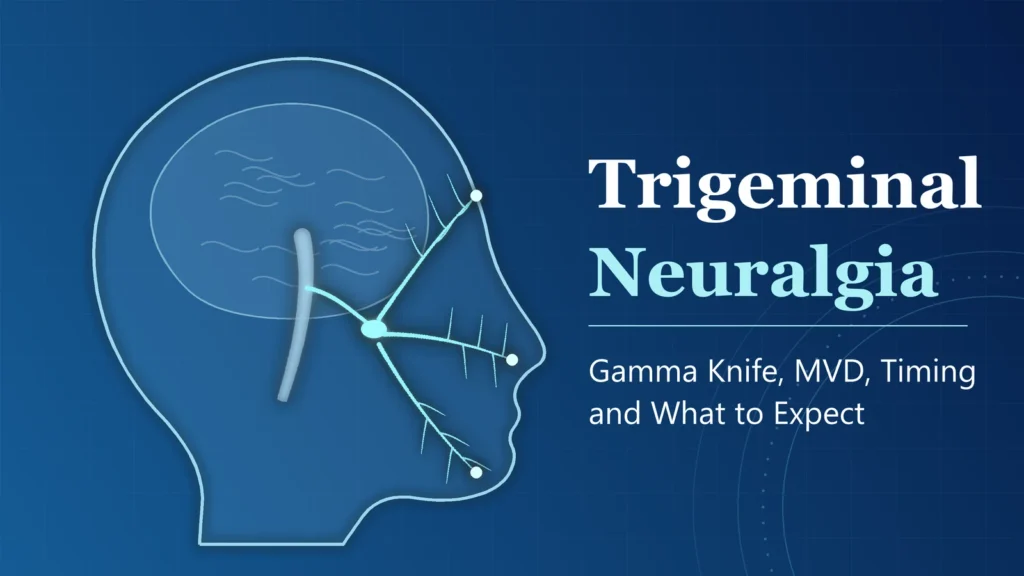
Trigeminal neuralgia causes repeated episodes of severe, electric-shock-like pain in the face. When medication can no longer control the pain, or side effects make it hard to keep taking it, many people wonder, “Can this be treated with Gamma Knife?” and “How is it different from open surgery?”
Treatment options for trigeminal neuralgia include medication, microvascular decompression (MVD), percutaneous procedures, and Gamma Knife. Gamma Knife focuses radiation on the trigeminal nerve without opening the skull, but it takes time for pain to ease, and recurrence and facial numbness need attention. For people with clear neurovascular compression, MVD may be given priority from the standpoint of long-term effect.
This article explains, in order, the symptoms and diagnosis of trigeminal neuralgia, the differences between treatments, how long it takes for Gamma Knife to take effect, how to read treatment results, recurrence and retreatment, and side effects. It also summarizes the information that people considering treatment in Japan from overseas should prepare before traveling, and follow-up after returning home. Individual treatment plans are decided by a physician who has reviewed your symptoms, MRI images, and treatment history.
When Is Gamma Knife Considered for Trigeminal Neuralgia?
Treatment of trigeminal neuralgia generally starts with medication. Anticonvulsants such as carbamazepine relieve pain in many people, but over the years they may become less effective, or side effects such as drowsiness and unsteadiness may make them hard to continue. At that stage, the options considered are MVD (microvascular decompression), a surgical procedure that involves opening the skull; percutaneous procedures, in which a thin needle is advanced through the face to the nerve; and Gamma Knife, a form of stereotactic radiosurgery (SRS).
Gamma Knife focuses radiation on the trigeminal nerve without cutting the head, aiming to make pain signals less likely to be transmitted. It places a relatively small burden on the body, but it is not suitable from the start for everyone with trigeminal neuralgia. Which treatment is appropriate is decided by considering the nature and course of the pain, whether MRI shows a blood vessel pressing on the trigeminal nerve, age and other medical conditions, prior treatment, and the patient’s own wishes.
When Gamma Knife Becomes a Treatment Option
Gamma Knife tends to be a realistic option when it is difficult to have MVD, the open surgery. MVD is an operation performed under general anesthesia in which a small part of the skull behind the ear is opened and the blood vessel pressing on the nerve is moved away from it. Whether someone can have surgery is not decided by age alone; it is judged by comprehensively evaluating medical conditions such as heart and lung disease, overall health, and the risks associated with anesthesia. For people judged to face a heavy burden from open surgery, Gamma Knife, which requires neither an incision nor general anesthesia, may be an option.
It is also considered when MVD is medically possible but the patient does not want open surgery. The choice of treatment involves not only how long the effect lasts but also how much surgical risk a person is willing to accept. Gamma Knife has the characteristic that pain relief takes time, while complications immediately after treatment are relatively few, and it is sometimes chosen with that understood.
In addition, treatments that act on the nerve may be considered when pain has recurred after MVD or a percutaneous procedure, when causes other than vascular compression are involved, such as trigeminal neuralgia associated with multiple sclerosis, or when MRI does not show clear vascular compression. However, outcomes of treatment in these cases may differ from those in classical trigeminal neuralgia. Not seeing vascular compression on imaging is not by itself a reason to conclude that Gamma Knife is suitable, and evaluation by a specialist, including reconfirmation of the diagnosis, is needed.
When MVD or Other Treatments Take Priority
Trigeminal neuralgia in which MRI or surgery confirms a blood vessel pressing on the trigeminal nerve, with changes in the nerve such as atrophy or displacement, is called “classical trigeminal neuralgia.” This is distinguished from a state in which a vessel merely touches the nerve. For this type, in people whose overall health allows open surgery, clinical practice guidelines from the European Academy of Neurology (EAN) and the Royal College of Surgeons (RCS) in the UK position MVD as the surgical treatment to consider first.
A retrospective comparison of MVD and Gamma Knife published in 2017 by the neurosurgery team at Koto Memorial Hospital also found better long-term pain control in the MVD group. However, differences in the backgrounds of the patients treated may have influenced the results, and this does not mean that MVD is superior for everyone.
In addition, Gamma Knife usually takes several weeks to several months before pain eases, so it is not suited to the purpose of relieving severe pain immediately. During an acute flare-up, adjusting medication takes priority, and in parallel you can consult a specialist about future treatment options. When the main symptom is a persistent dull pain, or when another cause such as a dental or jaw problem is suspected, the diagnosis needs to be reviewed before treatment of the nerve is considered.
Gamma Knife is not “a treatment anyone can have instead of open surgery.” Which treatment suits your condition is decided by a physician based on your MRI images and history.
What Is Trigeminal Neuralgia? Symptoms and What MRI Checks
The trigeminal nerve is the nerve that carries sensation from the face to the brain, and there is one on each side. It divides into three branches (one for the forehead and around the eye, one for the cheek and upper jaw, and one for the lower jaw), and the name “trigeminal” comes from this branching. Trigeminal neuralgia is a condition in which characteristic episodes of pain occur repeatedly in the area supplied by this nerve.
Characteristic Facial Pain and Types of Trigeminal Neuralgia
The pain of trigeminal neuralgia most often occurs on one side of the face. A sharp, intense pain described as “like an electric shock” or “stabbing” starts suddenly and usually subsides within a moment to two minutes. In some people it lasts longer. Attacks are triggered by light stimuli such as washing the face, brushing teeth, eating, talking, shaving or applying makeup, or wind touching the face.
The pain often occurs in the cheek or lower jaw branches, and some people alternate between periods of pain and periods when it subsides on its own. However, even if the pain disappears, the cause has not necessarily gone away. In addition to sharp attacks, some people have “trigeminal neuralgia with concomitant continuous pain,” in which a dull pain or heaviness persists in the same area. It is important to tell your doctor about pain between attacks as well.
The International Classification of Headache Disorders (ICHD-3) divides trigeminal neuralgia into three types by cause: “classical trigeminal neuralgia,” in which vascular compression is accompanied by morphological changes in the nerve such as atrophy or displacement; “secondary trigeminal neuralgia,” caused by another disease such as a brain tumor, multiple sclerosis, or arteriovenous malformation; and “idiopathic trigeminal neuralgia,” in which thorough examination finds neither classical nor secondary features. If a vessel touches the nerve but the nerve’s shape is unchanged, the classical criteria are not met, and the condition may be classified as idiopathic.
Trigeminal neuralgia is more common from the 50s onward and is said to be slightly more common in women. It rarely occurs on both sides, and when it does, the background, such as multiple sclerosis, needs to be checked.
The Role of MRI and Distinguishing Trigeminal Neuralgia From Other Facial Pain
Trigeminal neuralgia is diagnosed clinically by a physician based on the history: the nature, duration, triggers, and location of the pain. It cannot be diagnosed by imaging alone.
The first role of MRI is to check whether another disease that can cause similar pain, such as a brain tumor or multiple sclerosis, is present. The European Academy of Neurology guideline recommends high-resolution MRI as part of the workup for trigeminal neuralgia, because clinical symptoms alone cannot exclude a secondary cause.
The second is to evaluate in detail the relationship between the trigeminal nerve and blood vessels. Special MRI sequences are used to see whether a vessel next to the nerve is pressing on it and whether the nerve has changed shape. Whether a contrast agent is used and which imaging methods are needed are decided by the physician according to what needs to be confirmed and the patient’s condition. CT cannot evaluate the relationship between nerve and vessels at the same level as MRI.
Facial pain can also have causes other than trigeminal neuralgia, including dental disease, temporomandibular disorders, neuropathic pain after shingles or injury, and persistent facial pain. If pain does not change even after dental treatment, it is recommended to review the diagnosis, including trigeminal neuralgia.
If you have reduced facial sensation, difficulty moving the face, hearing loss, pain on both sides, fever or weight loss, or if the pain began at a young age, early specialist evaluation is important to check whether another disease is hidden. When you consult about treatment from overseas as well, your MRI images and your symptoms and treatment history are the starting point for judgment.
Main Treatments for Trigeminal Neuralgia: Medication, MVD, Percutaneous Procedures, and Gamma Knife
Treatment of trigeminal neuralgia basically starts with medication. When medication cannot control the pain sufficiently or cannot be continued because of side effects, MVD (microvascular decompression), percutaneous procedures, Gamma Knife, and other options are considered. Each differs in purpose, burden on the body, time to effect, and complications.
Medication, the First Treatment Considered
General painkillers are known to work poorly for the pain of trigeminal neuralgia. There is also not enough evidence that opioids help in treating trigeminal neuralgia, and they are usually not recommended. The first-line drugs are carbamazepine and oxcarbazepine, which calm excessive excitability of the nerve. The European Academy of Neurology guideline recommends both drugs as first-line treatment, and a UK guideline positions carbamazepine as first-line and oxcarbazepine as an alternative.
These drugs have side effects such as drowsiness, unsteadiness, and nausea, and the dose is adjusted from a small starting dose while checking effect and side effects. Tests such as blood counts, liver function, and blood sodium may be needed. People with certain genetic backgrounds also need attention to the risk of serious skin reactions.
If the effect is insufficient, lamotrigine, baclofen, gabapentin, pregabalin, and others may be added or substituted. However, these drugs do not have the same level of evidence as the first-line drugs. When pain suddenly becomes severe, short-term pain relief at a specialist facility may also be considered.
Even when medication is keeping the pain calm, do not stop it suddenly on your own; consult your doctor. If the pain cannot be controlled sufficiently with medication, if drug side effects interfere with daily life, or if pain greatly impairs daily life, these are signs that it is time to discuss other options with a neurosurgeon.
Differences Between MVD, Percutaneous Procedures, and Gamma Knife
MVD (microvascular decompression) is an operation performed under general anesthesia in which the skull is opened behind the ear and the blood vessel pressing on the trigeminal nerve is moved away from the nerve. When neurovascular compression is the cause of pain, it directly relieves that compression, and its purpose is not to damage the nerve. Many people have pain relief from soon after surgery, and good long-term pain control has also been reported. On the other hand, it carries the risks that come with open surgery, such as cerebrospinal fluid leak, infection, hearing loss, and, rarely, stroke, and it requires hospitalization and a recovery period. If pain recurs, treatment including repeat MVD is reconsidered.
Percutaneous procedures advance a needle through the cheek to reach the trigeminal ganglion and other sites, acting on part of the nerve to reduce transmission of pain. Methods include balloon compression, radiofrequency thermocoagulation, and glycerol injection. Pain relief may come relatively quickly, but attention is needed to reduced facial sensation, reduced corneal reflex, and weakened chewing strength, and pain may rarely arise in areas that have lost sensation. The anesthesia needed and the length of hospital stay differ by method and facility.
Gamma Knife focuses radiation on a limited part of the trigeminal nerve without opening the skull or puncturing the trigeminal nerve. It does not remove the vascular compression itself. It is usually performed in a single session, and while its burden on the body is relatively small, it takes weeks to months for pain to ease, so it is not suited to the purpose of relieving pain immediately. Facial numbness and similar effects may appear later, and pain may recur. Retreatment may be possible in some cases, but the risk of sensory impairment needs to be carefully evaluated.
The main differences between the treatments are summarized in the table below.
Comparison of Treatments
| Treatment | Burden on the body | How the effect appears | Main cautions and when it is considered |
|---|---|---|---|
| Medication | No incision. Ongoing medication and testing | Effect is checked after starting or increasing the dose | First-line treatment. Watch for drowsiness, unsteadiness, and blood tests |
| MVD | Open surgery under general anesthesia. Hospitalization and recovery period | Many people have early relief, from soon after surgery | When neurovascular compression is present. Cerebrospinal fluid leak, effects on hearing, etc. |
| Percutaneous procedures | Needle procedure through the cheek. Anesthesia and hospitalization depend on the method | Pain may be relieved relatively early | Watch for reduced facial sensation and corneal reflex, and for recurrence |
| Gamma Knife | No skull opening and no needle puncture of the nerve. Head is fixed in place | Effect is usually checked over several weeks to several months | For people for whom open surgery is difficult, etc. Watch for delayed numbness and recurrence |
In choosing, we consider comprehensively whether MRI confirms neurovascular compression, overall health and anesthesia risk, prior treatment, the nature of the pain, the speed and durability of effect, risks such as sensory impairment, and the patient’s wishes. When there is continuous pain, among other situations, the outcome of treatments that act on the nerve needs to be considered more carefully.
How Gamma Knife Is Performed and How Long Until Pain Eases
Gamma Knife for trigeminal neuralgia differs from Gamma Knife for brain tumors in both its target and how its effect is evaluated. Here we explain how the trigeminal nerve is treated and how long it takes for changes in pain to appear.
Treatment Targeting the Trigeminal Nerve
Gamma Knife for trigeminal neuralgia targets a part of the trigeminal nerve near the brainstem, among other sites, and concentrates thin beams of radiation from many directions. Radiation is concentrated on a very limited segment of the nerve, and the treatment plan is made so as to minimize effects on surrounding structures such as the brainstem. Which position is targeted differs by treatment policy and facility.
For brain tumors, the size of the tumor and similar findings are evaluated on imaging, but for trigeminal neuralgia, the basis for judging treatment effect is how the frequency and intensity of attacks and the amount of medication needed have changed. The goal is reduction of pain; it is not a treatment that directly removes vascular compression.
On the day of treatment, the head is fixed, the nerve and surrounding structures are confirmed with MRI and similar imaging, and the irradiation plan is made. For Gamma Knife in general, there are a method of attaching a frame under local anesthesia and a method of fixation with a mask, and which is used differs by facility and by treatment. Neither opening the skull nor puncturing the trigeminal nerve is necessary. Irradiation is usually done in a single session, and some facilities perform it as a day procedure, but please confirm the actual flow with the facility where you will be treated.
Time Until the Effect Appears, and Handling Medication After Treatment
Pain does not necessarily disappear immediately after Gamma Knife. It takes time for the effect of radiation to appear, and the medical literature says that it usually takes about 1 to 3 months for pain to ease. However, some people notice a change in a few days, and others take several months. In multiple studies of first-time Gamma Knife treatment, the median time to pain relief ranged from 10 to 90 days depending on the study. This is not a median that applies to all patients; it is the range of values reported by individual studies.
Even if pain does not change right after treatment, that alone does not mean the treatment is ineffective, and progress is sometimes checked over a period of months. However, if severe pain continues, if pain becomes worse than before, or if new changes in sensation appear, consult your doctor rather than endure it until the scheduled date for evaluating the effect.
“Recovering physically from treatment” and “trigeminal neuralgia improving” are different things. Even if discomfort at the head-fixation sites or a mild headache settles and you return to daily life, that does not necessarily mean the effect on neuralgia has appeared. Physical recovery may progress in a matter of days, though it varies from person to person, and changes in pain can take longer.
Do not reduce or stop carbamazepine or similar drugs on your own right after treatment; adjust them under your doctor’s instructions while checking the course of your pain. Even when pain has settled, do not stop medication suddenly, and discuss with your doctor how to reduce it. Keeping a record of the frequency and intensity of attacks, triggers, and medication doses makes it easier to share changes before and after treatment. For people receiving treatment from overseas, it is important to confirm in advance how they will coordinate with the doctor who will manage their medication after returning home.
How to Read the Effectiveness and “Success Rate” of Gamma Knife
When you look up Gamma Knife for trigeminal neuralgia, you may see different figures such as “a success rate of 70-80%,” “about half are pain-free,” and “a recurrence rate of 30%.” One reason the numbers differ is that studies differ in what they count as “success” and in which patients were followed and for how long.
The Difference Between Being Completely Pain-Free and Having Pain Controlled With Medication
The “BNI Pain Scale,” which combines pain and medication status, is often used to report outcomes of trigeminal neuralgia treatment. Being completely free of pain without medication and having pain adequately controlled with medication are different results for the patient.
| Grade | Pain | Medication use and meaning |
|---|---|---|
| I | None | Completely pain-free without medication |
| II | Occasional | No medication. Pain is rare |
| IIIa | None | Continuing medication |
| IIIb | Present | Adequately controlled with medication |
| IV | Present | Not adequately controlled even with medication |
| V | Severe or no relief | Medication use is not part of the definition |
Some studies define BNI I-II as “complete pain relief” and I-IIIa or I-IIIb as a “good outcome.” For example, even if a “success rate of 80%” is given, you cannot tell which grades are included without checking the definition used in that study.
In a systematic review published in 2019 by the International Stereotactic Radiosurgery Society (ISRS), covering reports from 45 studies and 5,687 people on first-time Gamma Knife treatment, the proportion who became pain-free regardless of medication use was about 85% on average of the study-level reported values, and the proportion pain-free without medication was about 53% on average. These are averages of reported rates gathered from multiple studies; they are not figures that directly compare the same patients by two criteria. Patient populations, follow-up periods, and evaluation methods also differ between studies.
Points to Note When Comparing Treatment Results
First, early results and results after several years are different. In a retrospective comparison reported by Dr. Inoue and colleagues in 2017, 179 people who had MVD and 52 who had Gamma Knife were followed for at least one year. The proportion who reached a pain-free state without medication at the initial evaluation was about 97% for MVD and about 96% for Gamma Knife, but the proportions who later moved back into a state of needing medication again were about 6% and about 52%, respectively, and long-term pain control was better in the MVD group. However, needing to resume medication and recurrence of pain are not the same measure, and differences in patient backgrounds may have influenced the results.
In a 2024 single-center retrospective study (70 people, mean follow-up about 51 months), the proportion who obtained some pain relief at the initial evaluation was about 91%. On the other hand, at the final follow-up, the proportion in BNI I-II, which the study defined as “complete pain relief,” was about 59%, and the proportion in BNI III was about 19%. Because BNI II includes occasional pain, the study’s label “complete pain relief” does not mean that everyone was completely pain-free.
Next, patients’ conditions differ. Results can change between classical trigeminal neuralgia and trigeminal neuralgia associated with multiple sclerosis and similar conditions, between first treatment and retreatment, and depending on whether there was prior treatment. Numbers from different studies cannot simply be lined up to judge which of MVD and Gamma Knife is better.
MVD has been reported to have good long-term effects in people who have neurovascular compression and can undergo surgery. Gamma Knife, on the other hand, is an option for people for whom open surgery is not suitable, among others. What is shown here are results for populations in the medical literature; they are not the success rate of our center. For an individual outlook, please consult a physician based on your symptoms, MRI images, and treatment history.
If Pain Recurs or the Effect Is Insufficient
In trigeminal neuralgia, we distinguish between the case in which no effect is obtained from the start even after enough time has passed, and “recurrence,” in which pain returns after once improving. In either case, re-evaluating the situation may allow other treatment options to be considered.
Responses Considered When Pain Recurs
Because it can take weeks to months after Gamma Knife for pain to ease, you cannot conclude right after treatment that it “did not work.” However, if the pain is severe or symptoms worsen, consult your doctor rather than endure until the time of evaluating the effect.
After pain has once improved, some people have a long-lasting effect and others have a recurrence. In the 2019 ISRS systematic review, covering 45 studies of first-time Gamma Knife treatment (5,687 people in total), the recurrence rate ranged from 0 to about 52% depending on the study, and the average of the study-level reported values was about 25%. The time to recurrence also differed between studies. Because the definition of recurrence and the follow-up period were not uniform, the figure of about 25% cannot be applied as the probability of recurrence for an individual patient.
When pain returns, first check whether it is the same brief electric-shock pain as before or a different pain accompanied by persistent pain or numbness. If pain returned as medication was being reduced, medication may be readjusted under your doctor’s instructions. Where necessary, MRI is repeated to evaluate whether there is any new cause and whether the relationship between the trigeminal nerve and blood vessels has changed.
After that, adjusting medication, MVD, percutaneous procedures, repeat Gamma Knife irradiation, and other options are considered. MVD may also be performed after Gamma Knife, but the condition of the tissue at surgery may differ depending on the history of irradiation, so indications and the difficulty of surgery are judged individually. When severe pain needs to be controlled quickly, acute pain management is important, and repeat Gamma Knife irradiation cannot be treated as a pain-relief method with immediate effect.
Recurrence After MVD, and Repeat Gamma Knife Irradiation
If pain recurs after MVD, the images and surgical history are reviewed, and repeat MVD, percutaneous procedures, Gamma Knife, and others may be considered. The appropriate method differs depending on the content of the previous surgery and the current state of the nerve.
If pain recurs after Gamma Knife, repeat irradiation may be possible. However, not everyone can receive it. Factors considered include pain relief from the first treatment, the time since treatment, current facial sensation, the site and dose of the previous irradiation, and the dose to the brainstem.
A 2026 systematic review examined 21 studies including 2,020 people who had repeat irradiation, and reported that about 77% obtained good pain control and about 62% remained in a good state with long-term follow-up. However, patient backgrounds, follow-up periods, and the criteria for a good outcome differ between studies. The same result cannot be expected for every individual patient.
With repeat irradiation, particular attention is needed to facial numbness and sensory impairment. It is not simply a matter of lowering the dose uniformly; the treatment plan is judged carefully based on past irradiation conditions and the state of sensation. Few reports exist on a third or later irradiation. Please consult a specialist about whether repeat irradiation could be an option, including whether facilities able to provide it are available.
Side Effects of Gamma Knife: Facial Numbness and Changes in Sensation
Side effects of Gamma Knife in general include headache, nausea, and discomfort at the head-fixation sites that may occur on the day of treatment and over the following few days. What matters most in treating trigeminal neuralgia is the “change in facial sensation” that can occur because radiation acts on the trigeminal nerve itself.
Facial Numbness and Other Symptoms That Can Occur After Treatment
The trigeminal nerve carries sensation from the face. Because Gamma Knife concentrates radiation on this nerve to reduce pain, the sense of touch and similar sensations may also be affected. Some studies have reported an association between sensory change and good pain relief, but that does not mean treatment has not worked if there is no numbness, and numbness is not itself the aim of treatment.
“Reduced sensation” is a state in which the face feels dull when touched. “Dysesthesia” refers to changes such as tingling when not being touched or an unpleasant feeling when touched. Rarely, “anesthesia dolorosa,” a persistent pain in an area that has lost sensation, can occur.
These changes may appear not immediately after treatment but months to years later. In the 2019 ISRS systematic review as well, the study-level mean time until reduced sensation appeared after first-time Gamma Knife ranged widely, from 6 to 36 months.
In the same review, the proportion who developed some reduced sensation after first irradiation was about 22% on average of the study-level reported values, and reduced sensation to a degree felt as “bothersome” or “very bothersome” was about 3% on average. These are averages of values reported in multiple studies, not incidence rates calculated across all patients combined. Because irradiation conditions, follow-up periods, and evaluation methods differ, they do not indicate the probability for an individual patient.
The BNI Facial Numbness Scale is sometimes used to describe the degree of reduced sensation.
| Grade | Condition |
|---|---|
| I | No facial numbness |
| II | Mild numbness that is not bothersome |
| III | Numbness that is somewhat bothersome |
| IV | Numbness that is very bothersome |
Some people feel burdened even by mild numbness, while others place more importance on relief from their previous severe pain. In addition to whether there is a change in sensation, it is important to confirm its effect on daily life.
Symptoms involving the eye need particular attention. The first branch of the trigeminal nerve is involved in sensation of the cornea, and when sensation is reduced, the cornea may be injured without pain being felt. Reduced corneal reflex and dry eye can also occur. If dryness, redness, a foreign-body sensation, or changes in vision appear, consult your doctor or an ophthalmologist promptly.
What Matters When Thinking About Side-Effect Risk
The risk of side effects is not the same for all patients. The irradiation dose, which position on the trigeminal nerve is targeted, and prior treatment are all involved. In treatment planning, decisions are made taking into account the expected pain relief and risks such as facial sensory impairment.
Risk needs to be considered separately for first irradiation and repeat irradiation. In the 2026 systematic review of repeat irradiation (21 studies, 2,020 people with repeat irradiation), the pooled estimate of reduced facial sensation was about 39%. However, variation between studies was very large, and the figure does not show the probability for an individual patient. Dry cornea, dysesthesia, and changes in taste have also been reported.
The roughly 22% after first irradiation and the roughly 39% after repeat irradiation differ in population, evaluation method, and way of aggregating, so they cannot be compared directly to calculate how much the risk increases. People whose facial sensation has already decreased because of earlier percutaneous procedures or similar treatment, and people who have persistent pain between attacks, also need careful consideration of the effects of treatment.
If you notice new numbness or eye symptoms after treatment, report them to your doctor rather than deciding on your own. When receiving treatment in Japan from overseas, it is also important to identify, in advance, a doctor you can consult after returning home and, if needed, an ophthalmologist you can see.
For People Considering Gamma Knife Treatment in Japan From Overseas
If you are considering Gamma Knife treatment in Japan for trigeminal neuralgia from overseas, it is important, before planning travel, to organize your current diagnosis and treatment history and consult a specialist. There are other options, such as medication, MVD, and percutaneous procedures, and Gamma Knife is not always the best. Please note also that an advance consultation alone does not confirm treatment eligibility or acceptance.
Images, Symptoms, and Treatment History to Prepare Before a Consultation
The key materials are your MRI images with the radiology report, and your symptoms and treatment course so far. If possible, preparing the original image data with the date of imaging helps in evaluating the relationship between nerve and vessels and whether there is another cause. Whether MRI taken overseas can be used as is, or whether special high-resolution imaging needs to be added, depends on the content of the images and the judgment of the facility you consult. Before arranging new imaging on your own, please confirm which materials are needed and how to submit them.
For your pain, it helps to summarize on which side and in which part of the face it occurs, whether it is an electric-shock-like attack, about how many seconds it lasts, and how often it occurs. Also important are whether attacks are triggered by eating, brushing teeth, washing the face, or talking, whether a dull pain continues between attacks, and whether you have facial numbness.
For current and past medications, organize the drug name, dose per time, number of doses, effect, side effects, and the reason for stopping. If you have had MVD, a percutaneous procedure, or Gamma Knife, prepare the timing and content of the treatment, the course afterward, and, if possible, the operative record or radiation therapy record. For consultations about repeat irradiation in particular, the details of past irradiation are important.
Please also tell us about coexisting conditions such as multiple sclerosis, heart and lung disease or anesthesia risks, the treatment policy currently recommended to you, and your wishes and concerns. Even if you prepare these materials, the final diagnosis and indications are decided by a physician based on the images and clinical information.
If the pain is so severe that you cannot take in enough fluids or food, or you otherwise need urgent care, prioritize consulting a medical institution in the country or region where you are now over preparing to travel to Japan.
Follow-Up of Pain, Medication, and Sensation After Returning Home
Even though irradiation is completed on the day of treatment, the pain of trigeminal neuralgia does not necessarily disappear right away with Gamma Knife. For people treated from overseas, the effect may begin to appear after returning home. It is important to confirm before treatment who will manage your pain and medication after you return home.
Do not reduce or stop medication on your own; adjust it in consultation with your local doctor while checking how your symptoms change. After returning home, keeping a record of the intensity and frequency of pain, the duration of attacks, medication doses, and the effect on daily life makes it easier to share changes.
Even after pain has eased, facial numbness and reduced sensation may appear later. Report any new change in sensation or any change in the nature of the pain to your doctor. If dry eyes, redness, or changes in vision occur, reduced corneal sensation may be involved, so it is important to consult your doctor or an ophthalmologist promptly.
Whether imaging such as MRI is needed, and when, differs according to the diagnosis, symptoms, and treatment history. Because following shrinkage of a tumor is not the main way to evaluate trigeminal neuralgia, the general MRI interval used for other conditions cannot be applied as it is.
Before traveling, we recommend confirming the division of roles between the treatment facility and your local doctor, how medical information and images will be shared, and whom to consult if unexpected symptoms occur.
Frequently Asked Questions
Can I stop my trigeminal neuralgia medication right after Gamma Knife?
Pain does not necessarily disappear right after treatment, and you may need to continue medication. Reduce or stop medication only under your doctor’s instructions while checking changes in pain and side effects. Avoid suddenly stopping medication on your own.
Can I have Gamma Knife if MRI does not show a blood vessel pressing on the nerve?
Treatments including Gamma Knife may be considered even for people without obvious vascular compression. However, suitability is not decided just because MRI does not show compression. It is judged after confirming whether the diagnosis of trigeminal neuralgia is appropriate, whether it could be another facial pain, and what treatment you have had.
My pain returned after MVD. Is Gamma Knife an option?
Gamma Knife may be considered for recurrence after MVD. On the other hand, repeat MVD, percutaneous procedures, or medication adjustment may be more suitable in some cases. The treatment policy differs by the content of your previous surgery, MRI findings, the nature of your pain, and your overall health, so please bring your treatment history and images and consult a specialist.
I have already had Gamma Knife once. Can I be irradiated again?
Repeat irradiation may be considered, but not everyone can receive it. We check the effect of the first irradiation, the dose and range of the previous treatment, the course since treatment, and the state of facial sensation. Because repeat irradiation also requires attention to the risk of sensory impairment, please prepare the records of your previous treatment and consult us.
A dull pain continues between attacks. Will Gamma Knife improve it?
Some types of trigeminal neuralgia have continuous pain accompanying short, electric-shock-like attacks. However, persistent facial pain may have another cause hidden, and the same result as for typical paroxysmal trigeminal neuralgia cannot be assured. First confirm the nature of your pain and the diagnosis, and discuss with your doctor which symptoms can be expected to improve after treatment.
Summary: Considering the Treatment That Suits You
Gamma Knife for trigeminal neuralgia is a treatment that concentrates radiation on the trigeminal nerve without opening the skull, aiming to reduce pain. It is considered for people for whom MVD is difficult or who do not want open surgery, but for people with clear neurovascular compression who can undergo surgery, MVD may be given priority from the standpoint of long-term pain control.
With Gamma Knife, the effect does not necessarily appear immediately after treatment, and changes in pain are usually checked over several weeks to several months. Even after improvement, pain may recur, and side effects such as facial numbness and changes in corneal sensation need attention. When you look at success-rate figures, check whether they mean pain-free without medication, whether they also include pain controlled with medication, and how long patients were followed.
The best treatment changes with MRI findings, the nature of the pain, other medical conditions, the effect of and side effects from medication, previous treatment, and the patient’s wishes. If you are considering treatment in Japan from overseas, organize your MRI images and your symptoms, medication, and treatment history, and consult a specialist, including follow-up after you return home.
If you would like to discuss treatment in Japan, please first check the contact page for the clinical information and images needed and how to submit them. A preliminary consultation alone does not confirm treatment eligibility or acceptance.