Request Your Consultation

What Is Gamma Knife?

An overview of incision-free stereotactic radio-surgery.

Request Your Consultation

What Is Gamma Knife?

Gamma Knife is an incision-free form of stereotactic radio-surgery.

Key features of Gamma Knife

01

Highly precise radiation treatment designed specifically for the brain.

02

Delivers focused radiation to the target without opening the skull.

03

Treatment is often completed in a short timeframe (typically one day to a few days). Timing depends on the condition and the treatment plan.

Gamma Knife is a form of stereotactic radio-surgery (SRS) that uses radiation to treat brain lesions with high precision. It delivers multiple fine beams of gamma radiation—generated from cobalt-60 sources—that converge on a single target to deliver a concentrated dose.

During treatment, the head is immobilized using either a stereotactic frame or a custom-fitted mask. While the head remains secured, the treatment couch moves into position and radiation is delivered according to the treatment plan.

Because the procedure does not require opening the skull, it may reduce physical burden compared with open surgery. However, Gamma Knife does not remove the lesion immediately. Instead, it is intended to control growth or promote gradual shrinkage over time. For this reason, careful selection is important, based on factors such as the lesion type, size, and location.

Gamma Knife vs.
Open Surgery and Other
Radiation Therapies

Is Gamma Knife a substitute for open surgery?
And how does it differ from conventional radiation therapy delivered with X-ray systems (such as a linear accelerator, or "linac") or from proton therapy?

Each treatment approach has its own role and indications, and the best option depends on factors such as the type, size, and location of the lesion, as well as symptoms and overall health.

In this section, we compare the major treatment options to clarify the key differences and how to think about choosing among them.

Comparison Item Open Surgery
(Craniotomy / Tumor Resection)
Gamma Knife X-ray Radiation Therapy
(e.g., Linac)
Particle Therapy
(Proton Therapy)
Treatment approach The skull is opened and the tumor/lesion is removed directly. Radiation is delivered without opening the skull by converging beams on a single focal point. Radiation is delivered using X-rays. Treatment is often divided into multiple sessions according to a treatment plan. Radiation is delivered using particle beams. Treatment is often divided into multiple sessions according to a treatment plan.
Primary goal Remove or debulk the tumor/lesion directly (may also relieve pressure and allow tissue diagnosis when needed). Control lesion growth and/or promote gradual shrinkage. Control lesion growth and/or promote gradual shrinkage. Control lesion growth and/or promote gradual shrinkage.
Physical burden Requires incision and anesthesia (surgically invasive). No incision. No incision. No incision.
Typical treatment course Usually requires hospitalization. Pre-operative preparation and post-operative care are needed, so planning for the hospital stay is required. Often completed in a short timeframe (timing may vary depending on planning, tests, and preparation). Often delivered over multiple sessions (requires repeated outpatient visits). Often delivered over multiple sessions (requires repeated outpatient visits).
When effects appear Changes may be seen immediately after surgery. Typically over months to a year or more. Typically over months to a year or more. Typically over months to a year or more.
General indication When the lesion needs to be removed/debulked directly, when symptoms from compression are significant, or when tissue diagnosis is required, etc. For intracranial lesions where targeted, incision-free radiation is considered appropriate. When, based on the lesion and its relationship to surrounding structures, treatment planned radiation (including fractionation) is considered appropriate. When the facility's criteria and resources are suitable and particle therapy is considered a viable option.
Target area Brain / intracranial region Head/brain only Whole body (including the head) Whole body (including the head)
Number of sessions One (re-operation may be needed in some cases). Typically one session. Multiple sessions (often delivered as fractionated treatment). Multiple sessions (often delivered as fractionated treatment).
Main risks Bleeding, infection, nerve injury, etc. Radiation-related swelling (edema), etc. Radiation reactions and post-treatment swelling (edema), etc. Radiation reactions, etc.

Conditions Commonly Treated
With Gamma Knife

At our center, we provide Gamma Knife treatment primarily for brain tumors, and also for conditions such as arteriovenous malformations (AVMs) and trigeminal neuralgia. The first step is a physician review of your imaging studies (such as MRI) to determine whether Gamma Knife may be an appropriate option.

Vascular Conditions icon

Vascular Conditions

  • Arteriovenous malformation (AVM)
  • Arteriovenous fistula (AVF)
  • Cavernous malformation
    (cavernous angioma), etc.
Benign Tumors icon

Benign Tumors

  • Meningioma
  • Vestibular schwannoma
    (acoustic neuroma)
  • Pituitary adenoma
  • Craniopharyngioma
  • Chordoma
  • Glioma, etc.
Malignant Tumors icon

Malignant Tumors

  • Brain metastases
    (metastatic brain tumors)
  • Malignant glioma, etc.
Functional Disorders icon

Functional Disorders

  • Trigeminal neuralgia
  • Cancer-related pain
    (not covered by insurance), etc.
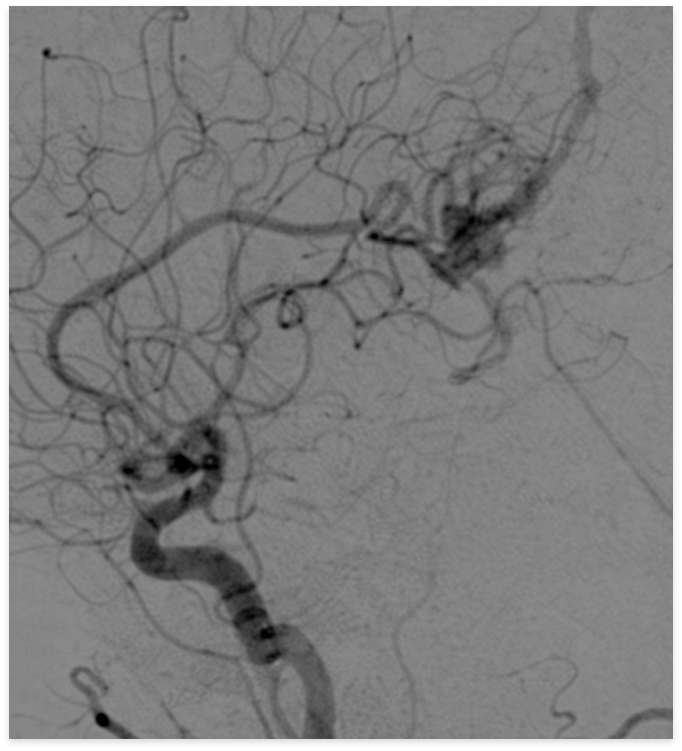
Brain AVM MRI image Vascular Conditions

Brain Arteriovenous Malformation(AVM)

An arteriovenous malformation (AVM) is an abnormal tangle of blood vessels in the brain in which arteries connect directly to veins without the usual capillary network. AVMs can be a cause of intracranial bleeding.

Why Gamma Knife may be an option

Smaller AVMs are often considered good candidates for Gamma Knife. After treatment, many AVMs gradually close off over time—often within about 3 to 5 years—though closure may also occur later in some cases.

How it differs from surgery

Even for relatively larger lesions, if surgical removal is difficult, treatment may be considered in 2 to 3 staged sessions. If complete obliteration is not achieved, additional Gamma Knife treatment may also be considered.

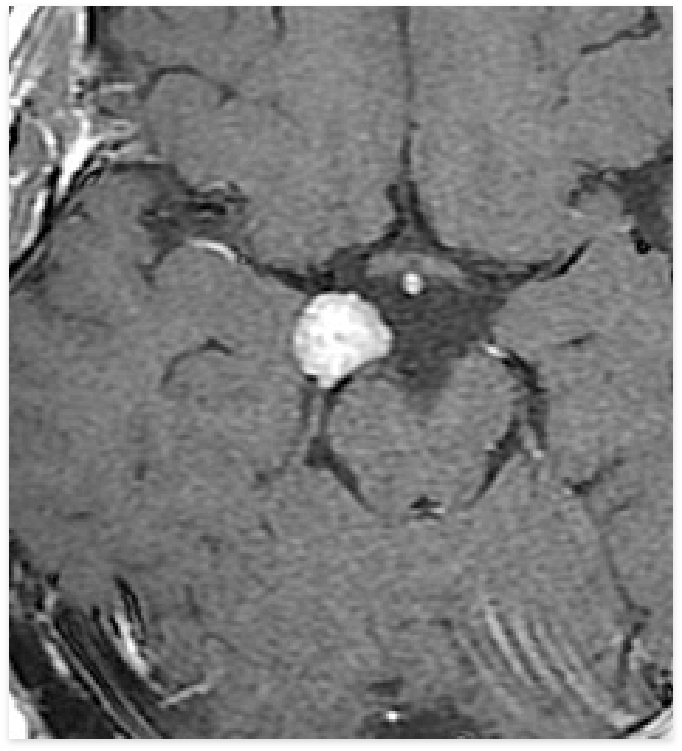
Meningioma MRI image Benign Tumors

Meningioma

Meningiomas are typically benign tumors that arise from the meninges—the membranes that cover the brain—and in some cases they grow slowly over time.

Why Gamma Knife may be an option

Gamma Knife may be considered for tumors located deep in the brain where surgical removal is difficult, or for residual tumor that could not be completely removed because it is adherent to blood vessels or other critical structures. After treatment, long-term tumor control rates of over 90% have been reported.

How it differs from surgery

If the tumor is large or symptoms are significant, surgery may be prioritized. In addition, larger tumors may not be eligible for Gamma Knife treatment in some cases.

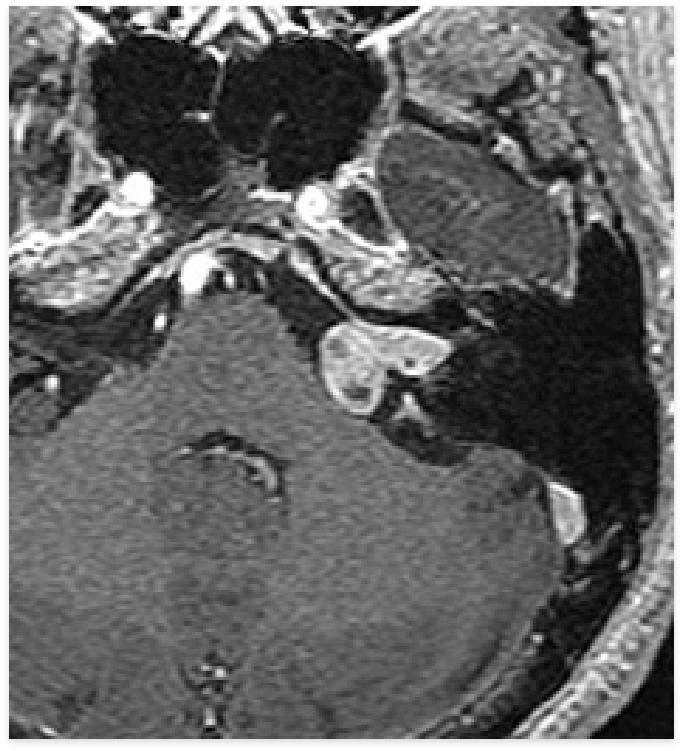
Vestibular Schwannoma MRI image Benign Tumors

Vestibular Schwannoma (Acoustic Neuroma)

A vestibular schwannoma (also known as an acoustic neuroma) is a benign tumor that arises from the vestibular nerve, which is related to balance and hearing. It may cause symptoms such as hearing loss and dizziness.

Why Gamma Knife may be an option

Gamma Knife may be considered for tumors located deep in the brain where surgical removal is difficult, or for residual tumor that could not be completely removed because it is adherent to blood vessels or other critical structures. After treatment, long-term tumor control rates of over 90% have been reported.

How it differs from surgery

If the tumor is large or compressing the brainstem, surgery may be prioritized. The likelihood of preserving hearing can vary depending on hearing function before treatment.

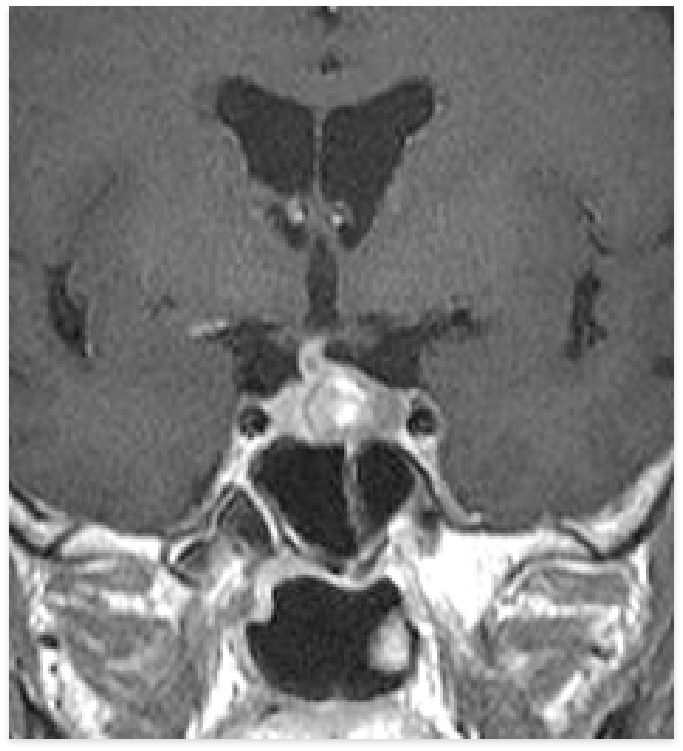
Pituitary Adenoma MRI image Benign Tumors

Pituitary Adenoma

A pituitary adenoma is a tumor that develops in the pituitary gland, located deep within the brain. It may cause hormonal imbalances and symptoms such as visual field disturbances.

Why Gamma Knife may be an option

Tumor control rates of over 90% have been reported. In particular, some non-functioning (non-hormone-secreting) adenomas may shrink over several years after treatment.

How it differs from surgery

When hormonal abnormalities are significant or there is strong compression of the optic nerves, surgery is generally prioritized first. For functioning (hormone-secreting) adenomas, a higher radiation dose may be required, so sufficient distance from the optic nerves is an important condition for treatment.

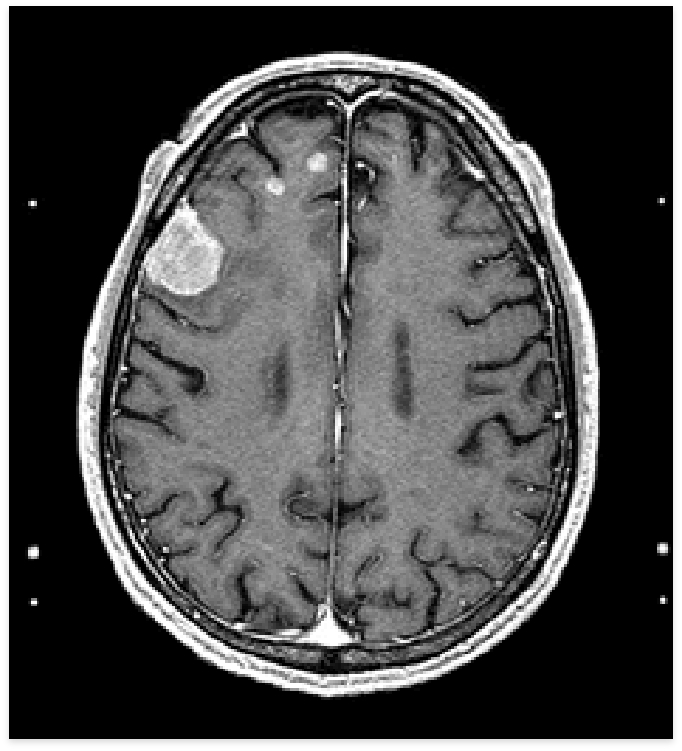
Brain Metastases MRI image Malignant Tumors

Brain Metastases (Metastatic Brain Tumors)

Brain metastases are tumors that occur when cancer from another part of the body spreads to the brain.

Why Gamma Knife may be an option

At our center, Gamma Knife is often considered for a limited number of metastases—for example, lesions under 3 cm in size and up to about 10–15 tumors—depending on the overall treatment strategy. After treatment, tumors may begin to shrink within a few months, and smaller lesions may even disappear within 1 to 3 months in some cases.

How it differs from surgery

If a lesion is large and causing significant mass effect or pressure, surgery may be prioritized. Even when there are multiple lesions or relatively larger tumors, staged treatment in 2 to 3 sessions may be considered in selected cases.

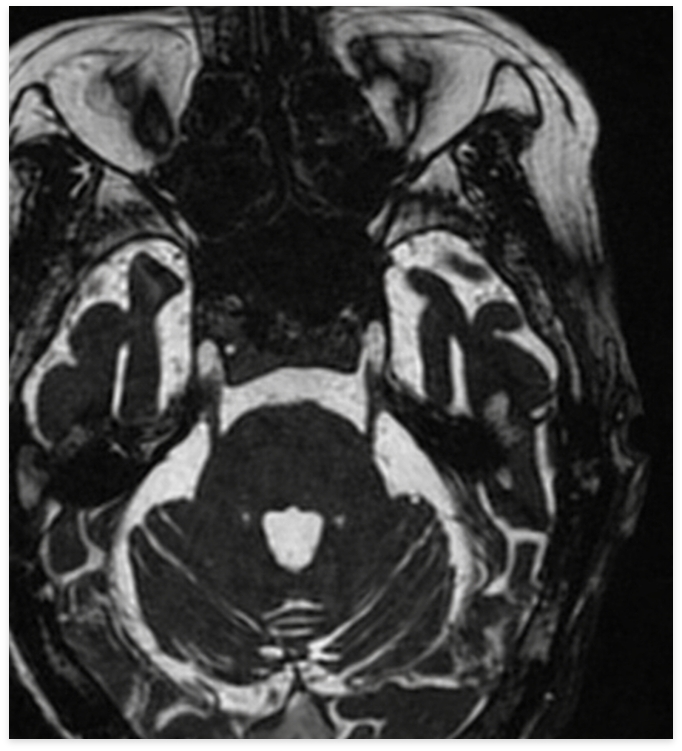
Trigeminal Neuralgia MRI image Functional Disorders

Trigeminal Neuralgia

Trigeminal neuralgia is a condition in which severe, electric shock–like pain occurs repeatedly on one side of the face.

Why Gamma Knife may be an option

Gamma Knife can be used to deliver a high dose of radiation to the trigeminal nerve on the painful side, with the goal of reducing pain.

How it differs from surgery

In general, Gamma Knife may be considered when surgical treatment is difficult or not suitable. Pain relief may take several months to appear in some cases.

When Gamma Knife
May Be a Good Option
— and When Careful
Evaluation Is Needed

Gamma Knife delivers highly focused radiation to a target lesion with the goal of controlling growth over time. Because eligibility depends on factors such as the lesion type, size, location, and symptoms, suitability is determined comprehensively based on imaging studies.

When Gamma Knife May Be
a Good Option

  • The lesion is relatively small
  • The lesion is located deep in the brain or near critical structures
  • Surgical risk is high
  • There is residual or recurrent disease after prior treatment
  • You want to minimize physical burden (avoid an incision)

Cases Requiring Careful
Evaluation

  • The lesion is large
  • Symptoms from mass effect/pressure are significant
  • Urgent decompression is needed
  • The lesion involves a broad area
  • Another treatment approach may be more appropriate or prioritized

*Final eligibility is determined based on imaging studies and evaluation by a specialist.

Possible Side Effects
and Complications
After Gamma Knife

Gamma Knife delivers highly focused radiation to a target lesion with the goal of controlling growth over time. Because eligibility depends on factors such as the lesion type, size, location, and symptoms, suitability is determined comprehensively based on imaging studies.

Reactions That May Occur
on the Day of Treatment to
the Next Few Days

  • Pain at the pin sites where the head frame was attached (if a frame is used)
  • Mild headache after the immobilization device is removed

*At our center, most post-treatment complaints are limited to the above.

Radiation-Related
Complications
(Months Later / Rare)

  • Temporary swelling of the tumor and/or surrounding brain tissue (cerebral edema) several months after treatment
  • Seizures
  • Radiation necrosis

*Risks vary depending on factors such as the treated area, lesion type, size, and radiation dose. Follow-up imaging may be used as needed to monitor changes over time.

FAQ


Is Gamma Knife a one-time treatment?

For many conditions, Gamma Knife is completed in a single session. However, depending on the type and size of the lesion, treatment may be divided into multiple sessions in some cases.

When will I see results?

Gamma Knife does not make a lesion disappear immediately after treatment. Instead, changes are monitored over time as the lesion gradually shrinks or its growth is controlled. The timing of evaluation varies depending on the condition.

Will the tumor go away?

The goal is not surgical removal, but to control growth. In some cases the tumor may disappear completely, but more commonly the aim is shrinkage or long-term stability.

Does radiation stay in my body after treatment?

No. Gamma Knife does not leave radiation in your body, and it does not make you radioactive. There is also no radiation risk to people around you after treatment.

Can I have Gamma Knife if I've had radiation therapy before?

It depends. If you have a history of prior radiation, careful evaluation is needed because the cumulative dose may be a concern. However, Gamma Knife may still be an option in some situations.