2026.09.22
Craniotomy (Open Brain Surgery): How Is It Different From Gamma Knife?
What Is a Craniotomy? How It Differs From Gamma Knife
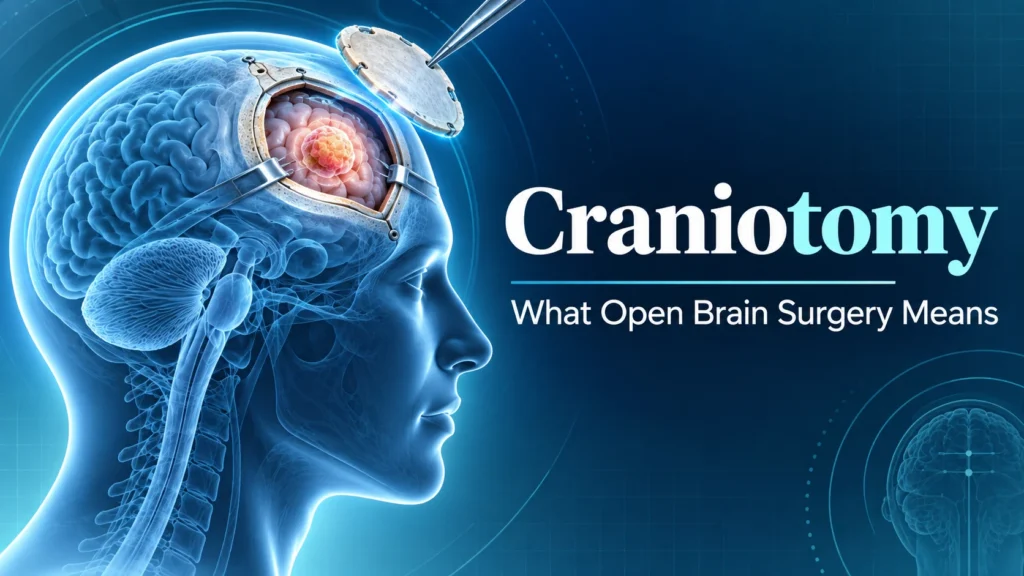
A craniotomy is surgery in which part of the skull is temporarily opened to reach a lesion in the brain. It is performed for a variety of purposes, such as removing tumors, treating vascular lesions, and obtaining tissue for diagnosis. At the end of the surgery, the opened section of skull is usually put back in its original position and secured.
A craniotomy differs from Gamma Knife in both method and purpose. Gamma Knife delivers stereotactic radiosurgery (SRS), focusing radiation on a lesion from multiple directions without opening the skull. Rather than removing the lesion at the time of treatment, Gamma Knife aims to suppress its further growth or to shrink it. By contrast, craniotomy allows the lesion to be removed directly and tissue to be obtained for pathological diagnosis.
How Are Craniotomy and Gamma Knife Chosen for Brain Tumors?
For this reason, it is not the case that “Gamma Knife, because it involves no incision, is always superior to open brain surgery.” When a lesion is large and pressing heavily on the brain, when symptoms are worsening rapidly, or when a tissue diagnosis is needed, a craniotomy may be an important treatment. On the other hand, when a lesion is small, Gamma Knife may be considered depending on its location and the patient’s condition.
In brain tumor treatment, it is also important not to think of craniotomy and Gamma Knife as an either-or choice. Multiple treatments may be combined, for example, by adding Gamma Knife for a lesion that remains after surgery, or by considering another treatment if the tumor recurs. Depending on the condition, observation may also be appropriate.
When comparing treatments, the decision takes into account not only “which is less invasive” but also whether the lesion needs to be removed, whether a tissue diagnosis is needed, how quickly pressure needs to be relieved, and how long-term control should be approached. If a craniotomy has been recommended but you would also like to know whether Gamma Knife is a possibility, prepare your MRI images and medical information and consult a specialist.
A craniotomy has roles that Gamma Knife does not, such as allowing the surgeon to see and remove the lesion directly and obtaining tissue that can lead to a definitive diagnosis. On the other hand, it may require general anesthesia, a hospital stay, and recovery of the surgical wound. The length of hospital stay and recovery needed varies greatly depending on the surgery and the patient’s condition.
Because Gamma Knife does not involve opening the skull, it may reduce the physical burden, but it is also an approach in which the treatment effect develops over time. In situations where the lesion needs to be physically removed, such as when severe pressure must be relieved right away, Gamma Knife cannot take the place of surgery. It is important not to oversimplify the two as “major surgery versus an easy treatment,” but to compare them with an understanding of the purpose and limitations of each.