2026.09.22
Radiation Necrosis After Gamma Knife or SRS: What Does It Mean?
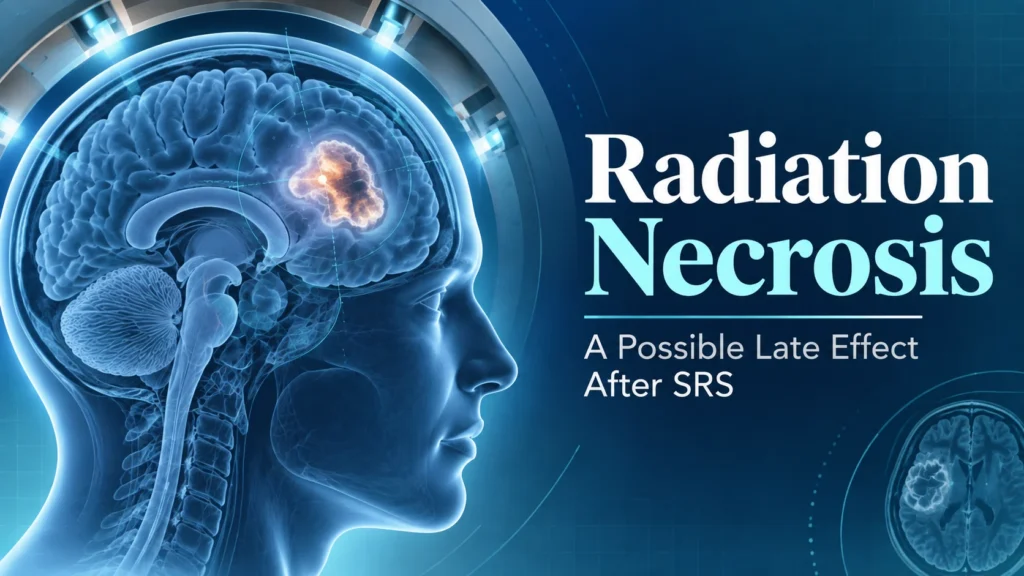
What Is Radiation Necrosis After Gamma Knife Treatment?
Radiation necrosis is a condition in which delayed radiation-related damage develops in the treated area of the brain or in the surrounding tissue after radiation therapy to the brain. It can also occur after stereotactic radiosurgery (SRS), including Gamma Knife, and may be found as a change on imaging several months or more after treatment.
Radiation necrosis may be discovered on MRI without any symptoms, or it may be accompanied by swelling (edema) in the surrounding brain and cause symptoms that depend on the location of the lesion, such as headache, seizures, or difficulty moving the arms or legs. However, these symptoms are not specific to radiation necrosis. If you have symptoms, do not try to judge them on your own; you need to be evaluated at a medical facility.
How Can Radiation Necrosis Be Distinguished From Brain Tumor Recurrence or Growth on MRI?
What makes diagnosis difficult is that radiation necrosis and tumor regrowth or progression can look similar on standard MRI. A lesion that looks larger after treatment does not necessarily mean the tumor has progressed. At the same time, it cannot simply be assumed to be radiation necrosis. Doctors make an overall judgment by combining comparison with previous images, contrast-enhanced MRI, and, when needed, additional imaging tests or other evaluations.
How it is managed also depends on symptoms and imaging findings. When there are no symptoms, it may be monitored over time, while when symptoms are present, medication or other treatment may be considered, and in some situations surgical or other treatment may be needed. The appropriate approach depends on factors such as the extent of radiation necrosis, symptoms, treatment history, and the status of the tumor.
If you traveled from overseas for Gamma Knife treatment, MRI follow-up after you return home is also important. Keeping your image data so that any changes found after treatment can be compared with earlier MRIs, and being able to share it with the treatment facility or your local doctors as needed, helps in evaluating your course.
The risk of radiation necrosis is not the same for everyone. Multiple factors are involved, including the size and location of the treatment target, the radiation dose delivered, previous radiation therapy, and treatments given in combination. For this reason, individual risk cannot be judged from general incidence rates alone. Before treatment, it is important to receive an explanation not only of the expected benefits but also of imaging changes and side effects that may occur later.
Also, the term “radiation necrosis” does not mean that all tissue that received radiation dies. SRS is planned to keep radiation to normal tissue as low as possible, but radiation necrosis should be understood as a complication that can occur in some patients during long-term follow-up after treatment.